
Drivers
Drivers get the day's stops on their phone and tell the customer when they are 30 minutes out
The driver's run is on the phone in stop order, with everything needed at the gate. Four big buttons replace the customer's call to dispatch asking where the truck is.
Request a demo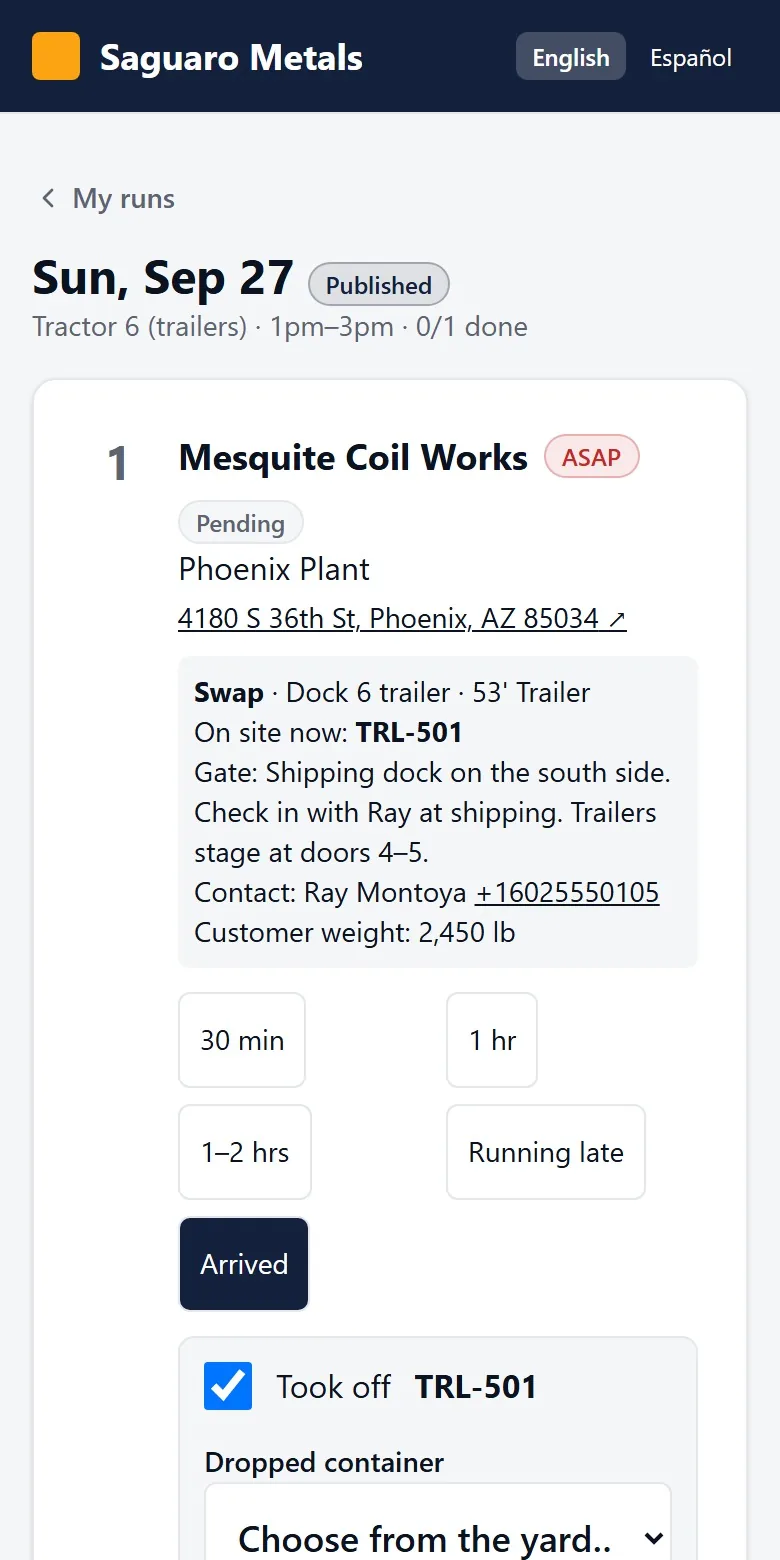
Today
What goes wrong without it
The printed sheet is out of date before the first stop.
Customers call dispatch to ask where the truck is, and dispatch calls the driver.
Gate instructions and contact names live in someone's head.
Which container came off and which went on is written down later, from memory.
The screens
What they see in BinCall
The stop
Customer, site, an address that opens in Maps, the job, the container on site, gate notes, a contact to call and the customer's weight.
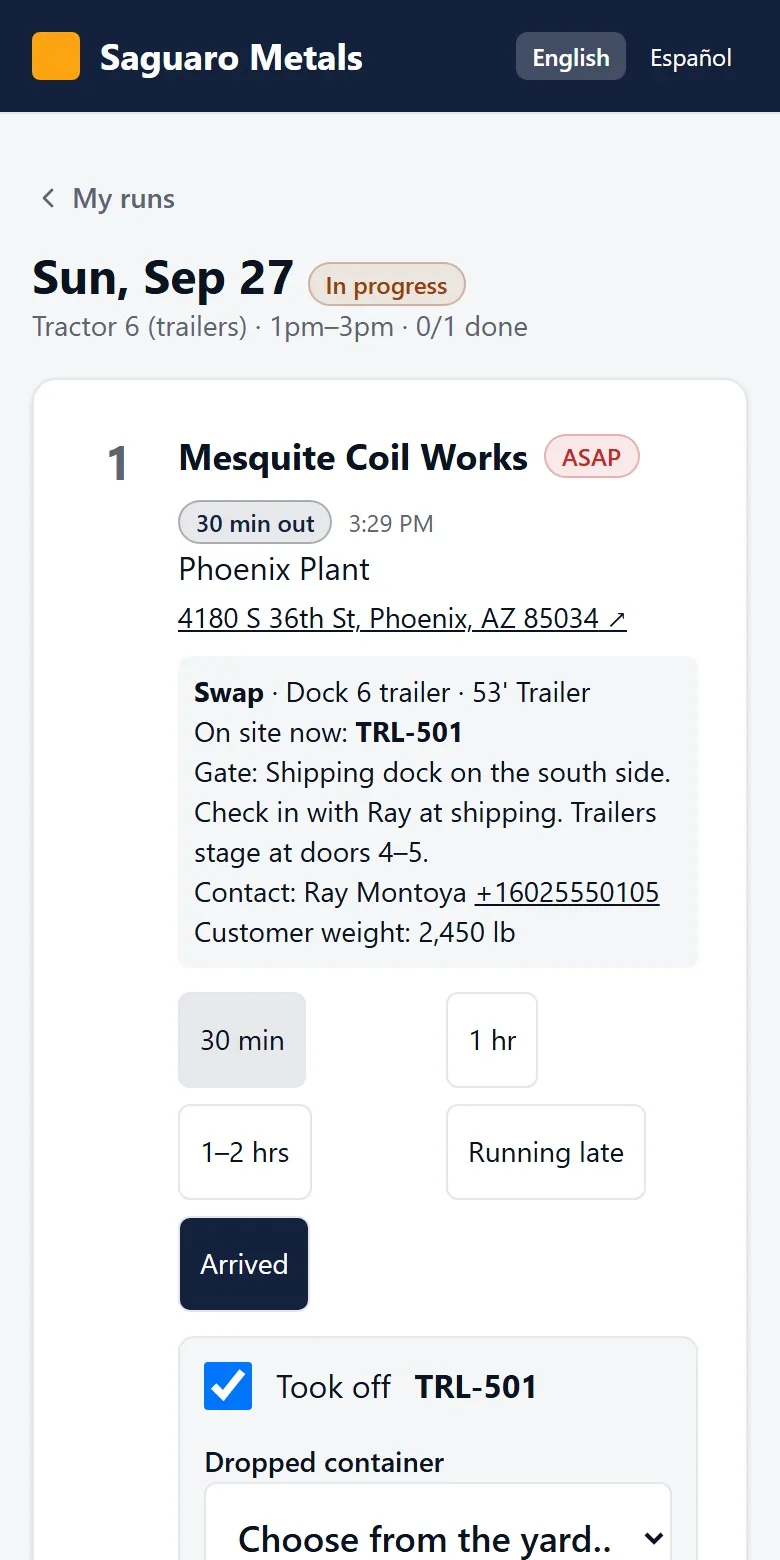
Arrival times
30 minutes, 1 hour, 1 to 2 hours, running late, arrived. Each tap tells everyone at that site.
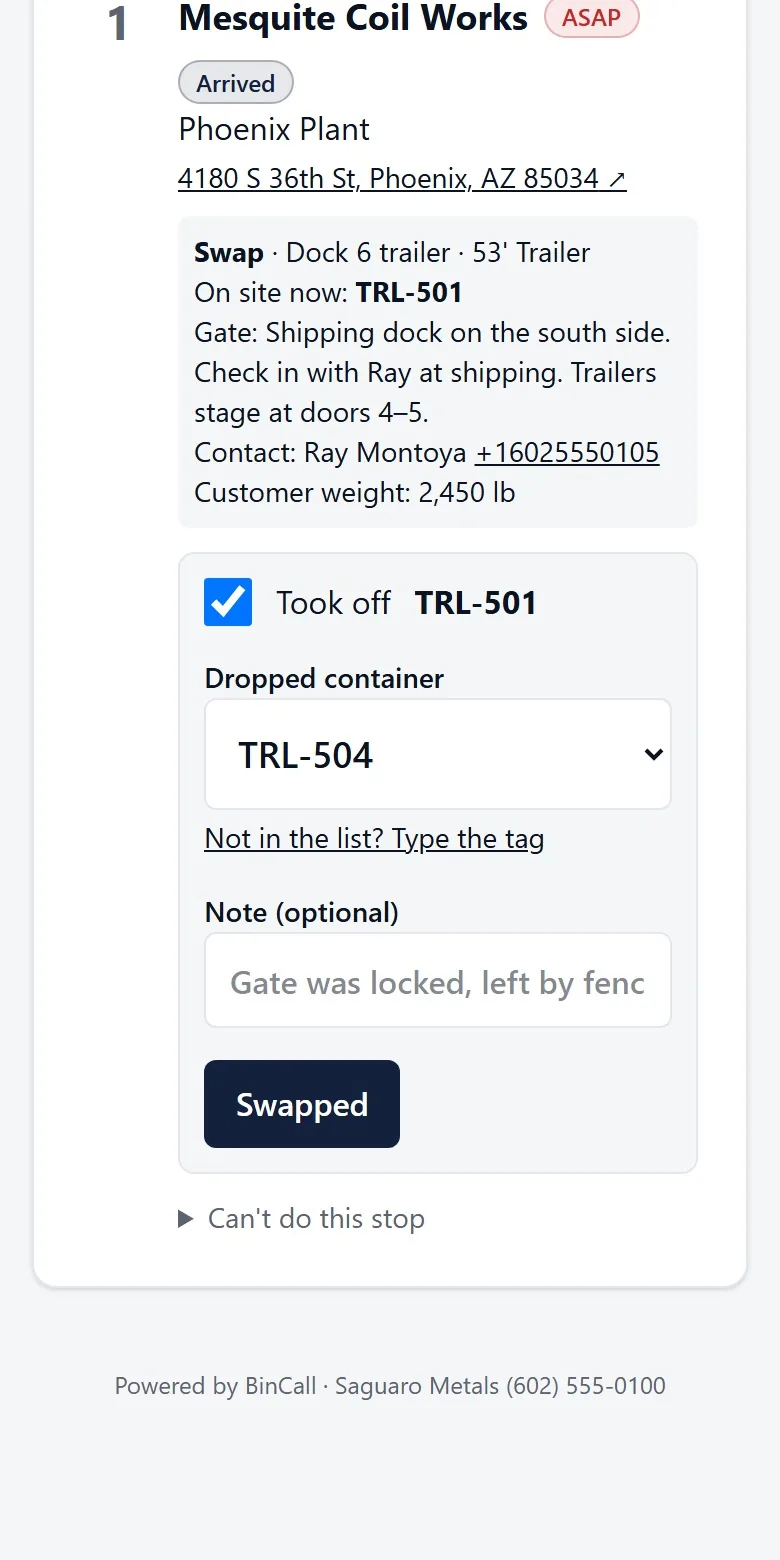
The swap
Confirm the tag that came off, pick the tag that went on, add a note, tap Swapped.
Capabilities
What it does
Today's run on top
Drivers sign in with a texted code and land on their runs. There is no password to forget.
Everything for the stop
What to do, where, which container is there now, how to get in the gate and who to call.
One-tap arrival times
The customer is told the truck is 30 minutes out, so the bins are staged when it arrives and not hours before.
Swapped, picked up, dropped
The driver records the container tags. The equipment list updates without a call to the yard.
Can't do this stop
The driver gives a reason. Dispatch sees it, the request returns to the waiting list and the customer is told it will be rescheduled.
English or Spanish
Each driver chooses the language on the phone.
Request a demo
See a full swap, start to finish
We walk you through one request on the real screens: the customer's phone, the dispatch queue, the driver's stops and the scale house. Bring the questions your dispatcher would ask.